63. Dorset Gardens New Launch: How to Use Brochure Info to Plan a Visit
When a new condo launch starts getting real momentum, the brochure becomes more than a glossy PDF you download and forget. For Dorset Gardens, the practical value is simple: it helps you time your visit, compare what matters to your household, and avoid spending the appointment hour on basic questions that you could have answered at home.
Based on what has been publicly shared about Dorset Gardens and the Dorset Road GLS site, here is the most useful way to use brochure info to plan your next move, especially if you are aiming to view the Dorset Gardens showflat and want to understand Dorset Gardens pricing without surprises.
What Dorset Gardens is likely positioning itself to be
Dorset Gardens is being marketed as an upcoming condominium project on Dorset Road, in Singapore’s District 8 area, near Farrer Park MRT. The naming matters here. The broader site story is that the Dorset Road land sale was won via a consortium involving UOL, Singapore Land Group (SingLand), and Kheng Leong Company. Public reporting tied the consortium bid to an October 2025 award, with the bid value stated as S$524.3 million, and an indicative cost figure of S$1,338 psf ppr.
That consortium structure can influence how you read the brochure. Even if the brochure is branded under “Dorset Gardens,” the development is not a one-company production. It is tied to a JV approach, and that sometimes shows up in how sales processes are run, what documents are available at launch preview, and how quickly marketing materials are refreshed.
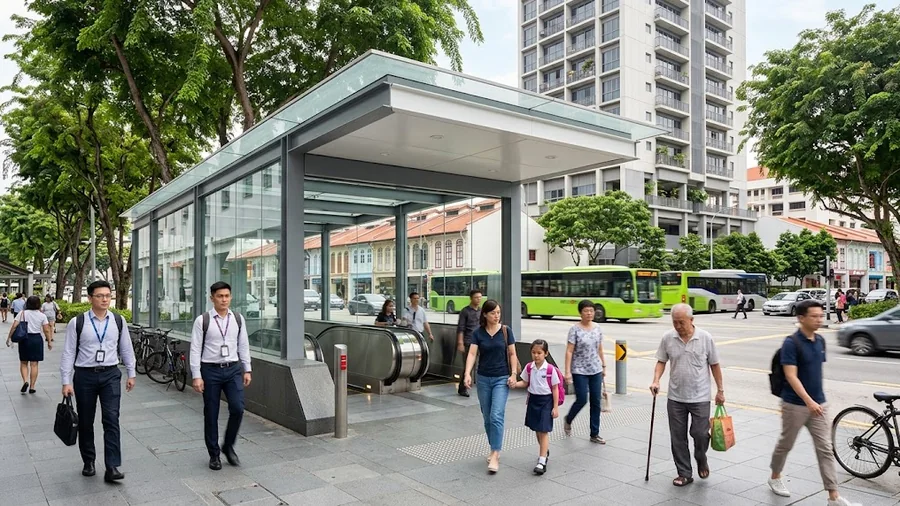
The location context is also not minor. Being on Dorset Road near Farrer Park MRT means the brochure will typically be used to frame convenience, commuting access, and nearby amenities. You should treat those as cues, not guarantees. Your best outcome comes from verifying what the brochure highlights against your own commute patterns, school routes, and daily errands.
There is also publicly shared information on lease and unit count, but with an important caution. One project page indicates the development is planned as a 99-year leasehold condominium with about 428 homes across two 27-storey towers. Since this detail comes from a marketing page associated with a related naming context, it is best to treat it as “planned” rather than “final,” and be prepared to confirm during your visit or via the brochure’s latest update.
Start with the brochure’s “what you need to decide” sections
Most buyers skim floor plans, look at showflat visuals, then hope the finer print is unimportant. With a new launch like Dorset Gardens, the brochure often acts like a decision compression tool. It tries to reduce uncertainty by grouping key items in one place: the overall concept, the unit mix, and the purchasing framework that will apply when you book and purchase.
When you are using the Dorset Gardens brochure, the goal is not to memorise every render. The goal is to extract what will affect your household, your cash flow, and your time horizon.
Here is how to do that methodically, without turning the brochure into homework.
First, identify the brochure version you have. New launch brochures can change as marketing pages update, registration pages refresh, and showflat details are finalised. If you download a Dorset Gardens brochure from a marketing site that also offers a “price list” registration flow, treat it like a snapshot. Print it or save the file, then check for any update date or any “latest” wording in the document or the surrounding landing page.
Second, read the unit-related content in layers. The brochure might list unit sizes, layouts, and stack references. Even if you do not pick an exact stack immediately, you want to see what the “typical” layouts are and how the bedrooms connect to living spaces. That tells you whether the project fits your lifestyle, for example, whether your home office needs a window, whether you need a longer dining area, and whether storage is likely to be adequate.
Third, track what the brochure says about purchasing terms in plain language. Even if Dorset Gardens pricing is not laid out fully in the early materials, brochure info often points to how pricing will be handled at launch, and how buyers can access the “direct developer price” pathway. If a marketing flow mentions a “price list” and “registration,” that is a signal that you may not see full pricing until you complete the registration or attend the preview.
That leads to the most practical tip: your brochure is not just for learning the product, it is also for learning the process. If the brochure suggests that price list access is tied to registration, plan your appointment accordingly. Do not book a showflat visit assuming you will be handed everything at the door. Instead, bring your registration confirmation and be ready to discuss the price list once it is provided.
Match the brochure’s promises to your real daily routine
A showflat is where you confirm feel and finish. A brochure is where you confirm fit. Buyers often mix those up, then blame the project when the decision was really about mismatch.
For Dorset Gardens, use the brochure to create a short list of what you need to validate onsite during the Dorset Gardens view showflat session. The key is that you should base your on-site questions on brochure statements, not on generic “what is the view like?” queries.
Consider the location claims first. The Dorset Road near Farrer Park MRT context means the brochure will almost certainly highlight commuting convenience. Your question should not be “is it near MRT,” because that is already implied. Your question should be, “what time window do I care about, and what route would I take?” If your household has different travel times, decide whose commute drives the decision. The brochure might not describe crowding or walking comfort during peak hours, and you will need to judge that yourself.
Next, consider the household needs the brochure hints at through unit mix. If the project is planned to contain roughly 428 homes across two 27-storey towers, that suggests a meaningful density of units. The brochure will often frame tower layouts, lift access points, and general building design. At the showflat, you should assess how circulation feels. It matters because a layout that looks spacious on paper can feel cramped if corridors and entry points are designed in a way that does not match your habits.
Finally, think about your comfort with uncertainty. New launch marketing is designed to build momentum, and brochures are part of that. If your household budget is strict, do not rely on brochure visuals to do the budgeting work. Use the brochure to locate how pricing is made available, what the next step is (for example, a “book appointment” flow), and what information is withheld until the preview or after registration.
Plan your Dorset Gardens visit around the process, not just the date
When you book a showflat appointment for a new launch, your time is expensive. You want to show up prepared enough that the first 10 minutes are not spent asking, “Where is the price list?” or “Which version of the brochure are you using?” That is how appointments end up feeling rushed, even when the sales team is responsive.
Marketing pages related to Dorset Gardens mention flows like brochure downloads, price list registration, and showflat appointment booking. Treat those flows as part of the choreography.
Before you go, make sure you understand what you already have access to. If your brochure includes a registration or appointment pathway, bring that documentation. If pricing is listed as “direct developer price” via registration, prepare for the possibility that your first pricing numbers come after the sales team confirms your eligibility or captures your details.
Also, consider timing. If the launch is still in a preview stage, you might be comparing early availability information with how things tighten later. A mature buyer strategy is to view once when you can still ask broad questions, then re-evaluate closer to when pricing and unit availability are more specific. You can do this without turning your life into a spreadsheet, but you do need to decide what you want from each visit.
For many people, the first visit is about fit and process. The second visit is about numbers and exact units.
Brochure-to-appointment: a practical way to use what you have
The simplest way to extract value from the Dorset Gardens brochure is to convert it into a set of onsite prompts. You do not need to memorise the project details. You need to know which sections matter most to your decision and which sections you will confirm during the Dorset Gardens book appointment.
Here is the approach that has worked well in my experience with new launch viewings.
First, highlight anything that is likely to affect your unit choice: unit type, size range, layout characteristics, and stack-specific information if the brochure provides it. Even if you are not choosing a stack that day, these details help you avoid “random browsing” during the showflat.
Second, separate “marketing language” from “decision language.” Marketing language sounds like a promise about lifestyle. Decision language tells you what you are buying, the structure of the purchase, and what documents will be provided.
Third, prepare your cashflow discussion points. You do not need exact pricing numbers to plan for the conversation, but you should walk in ready to discuss your budget ceiling and your timeline. If the brochure and associated price list registration flow indicates that Dorset Gardens pricing is provided via a later step, you can still decide whether you are ready to proceed once numbers are released.
If you want a short set of questions to bring, keep it focused and tied to what you read in the brochure, like this:
- Which brochure version is the latest, and does it align with the current price list issued after registration?
- What unit types are currently in the broadest availability range, and how does that affect choice for my preferred configuration?
- For the shown layouts, what are the trade-offs between practical livability and any constraints referenced in the brochure?
- How do the development details presented in the brochure translate into actual onsite building experience, for example, lift access and corridor feel?
- If I decide after the showflat visit, what is the next step for accessing the price list and completing registration?
This is not a script. It is a guardrail, so you can use your appointment time efficiently.
How to interpret “developer” information without overcommitting to the brochure
Because Dorset Gardens is tied to a consortium, the brochure may show brand language that feels like a single developer. Your job as a buyer is to map the marketing identity to the ownership and execution structure.
Public information tied to the Dorset Road GLS bid names the consortium as UOL, SingLand, and Kheng Leong Company. If the brochure refers to “developer” or includes company identity, use it to understand who you will be dealing with across the purchase process.
Why does this matter for your visit planning? Because the developer identity and consortium structure can influence the documents you receive and the sales process. Sometimes paperwork is handled through a designated entity, even if the marketing name is broader. Sometimes the timetable for information release depends on approvals and registration steps.
You do not need to become a corporate researcher for Dorset Gardens. You only need to know what is in your hands: 1) the brochure you downloaded, 2) the registration pathway, 3) the showflat appointment logistics, 4) and the pricing access workflow implied by the marketing page.
If the brochure says prices are shared through a registered “price list” process, then showing up prepared with your registration details is a smarter play than hoping pricing is “walk-in available.”
Edge cases that can trip up buyers on a first visit
New launch viewings are smooth when the buyer and the process are aligned. They get frustrating when you show up expecting one thing and the brochure points to another.
Here are the most common edge cases to watch for, based on how marketing flows for new condos are typically run.
1) You downloaded a brochure, but you do not know if it is the latest
If the brochure was downloaded from a page that also offers price list registration and showflat appointment booking, it may not be the most updated version. Bring the version you have, but also ask whether the sales team is using a newer edition at the current stage.
2) You expect Dorset Gardens pricing to be quoted immediately
Even when “direct developer price” is mentioned, the brochure or the surrounding marketing page can still require registration before the full price list is shared. Plan your budget conversation around that reality.
3) You fall in love with a showflat corner that does not match your daily movement
A showflat often presents the best angle. The brochure may show layouts that look identical across stacks, but the lived experience can differ with orientation, corridor placement, and how the unit’s entry and common areas feel.
4) You ask broad questions because you do not have unit preferences yet
This is where buyers lose time. If you go in with no preference, the sales team must assess your needs and guide you, and the appointment can feel long but unproductive. Use the brochure to decide what you care about most. Even one priority, like kitchen workflow or bedroom privacy, is enough to make the visit efficient.
5) You plan a visit without aligning your commute reality
The brochure may highlight Dorset Gardens location near Farrer Park MRT, and that is useful. Still, you should test the route at the time you care about. If you only verify “distance,” you might still be surprised by walking time, crossing comfort, and crowding patterns.
What “Dorset Gardens project details” should mean to you on-site
The phrase “project details” sounds generic, but in a new launch context it usually includes three buckets: the physical build and unit design, the development planning and timeline language, and the purchasing structure.
In your brochure review, treat project details as a filter. Do not get distracted by everything that sounds impressive. Instead, focus on the parts that connect to your unit choice and your purchase decision.
For Dorset Gardens, keep the following context in mind while you read:
- it is marketed as a Dorset Road condominium in District 8 near Farrer Park MRT,
- it is tied to a consortium including UOL, SingLand, and Kheng Leong Company,
- and it has publicly shared planning indicators around lease tenure and unit count, with at least one marketing page indicating 99-year leasehold and about 428 homes across two towers.
Even when you have these indicators, your safest move is still confirmation at the showflat stage. Brochure info can be accurate but not complete, and early materials may reflect planning status rather than final executed terms.
Building a buyer’s timeline from brochure download to showflat and beyond
Once you see how brochures and marketing flows are connected, you can create a sensible personal timeline.
Typically, your first step is to download and read the Dorset Gardens brochure. Then you decide whether you want to book an appointment now or wait for a later update that is closer to when pricing is more clearly communicated. Marketing pages tied to Dorset Gardens often indicate the existence of price list registration and a showflat appointment booking process. That means your decision timeline can be structured around information release.
For buyers who are serious but cautious, a common pattern is:
- use the first brochure to validate unit fit and understand how the process works,
- visit the Dorset Gardens view showflat to validate livability, finish level, and layout feel,
- and only then lock your next decisions after the price list and confirmed details align with your budget.
This is where the brochure earns its keep. It helps you time when you can afford to get excited, and when you should slow down and verify.
Final check: what to do if your brochure answers some questions but not the ones you care about
Sometimes the Dorset Gardens brochure gives you enough detail to shortlist layouts but not enough to close the loop on your specific priorities. That is normal. The mistake is to pretend you are satisfied just because the brochure is “informative.”
If you reach that moment, go back to your guiding rule: your next action should be based on what is missing, not on what is present.
If you cannot see full Dorset Gardens pricing through the brochure alone, your next step is not to panic. It is to use the brochure’s implied pathway, including brochure registration and showflat appointment planning flows, so you can access the price list information when it is meant to be shared.
If the brochure gives you location confidence but you still worry about commute practicality, your next step is to Dorset Gardens by UOL Group validate your route around the time you care about, then ask targeted questions during the visit.
And if you feel uncertain about “project details” because the brochure is broad, your next step is to confirm the items you must have clarified before committing, especially anything that affects unit choice, purchase process, or how pricing is communicated.
Dorset Gardens looks positioned as a new launch that will attract early attention, especially given its Dorset Road address near Farrer Park MRT and its consortium-led development background. The brochure is your tool to convert that attention into a grounded decision.

When you use it the right way, the showflat appointment stops being a sales event and starts being a verification step. That is the difference between being impressed and being confident.